Topic Hub
Spiritual Books: How to Choose, What to Read, Where to Start
More spiritual books are published every year than anyone could read in a lifetime. This page is AMC Publishers' working answer to the question readers actually ask: which ones are worth opening, and where should you start.
What makes a spiritual book worth reading
Most books shelved as "spiritual" fall into one of three categories. Devotional books written from inside a tradition. Self-help books that wear spiritual language. And serious works of inquiry that take the territory seriously without slipping into either dogma or marketing. The third category is small. It is also the only one worth a long-term reading practice.
AMC Publishers applies four tests when deciding whether a book belongs on a recommended reading list. The book is grounded — it makes claims that connect to lived experience, not abstractions hovering above it. It is honest — it does not flatten difficult territory or promise outcomes that practice does not deliver. It is connected — it knows the tradition and the contemporary research, and engages both. And it is generative — reading it changes how you pay attention afterwards.
Where to start as a beginner
If you are new to spiritual reading, the temptation is to start with the most famous books — the Tao Te Ching, the Bhagavad Gita, Pema Chödrön. These are excellent eventually. They are not the easiest first books, because they assume frameworks that take time to absorb.
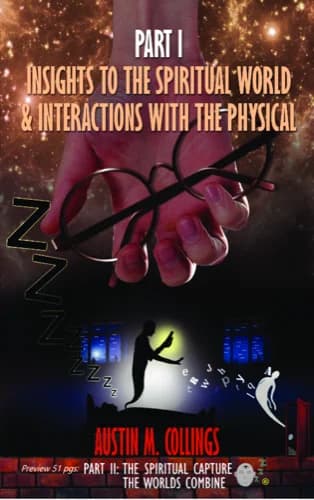
Better starting points are books that build the framework while you read. AMC Publishers' Insights to the Spiritual World was written for exactly this position: a working map of how spiritual experience and physical reality interact, structured as short insights rather than systematic argument. Readers report being able to put it down and pick it up without losing the thread.
From a working framework, the older traditions become readable. The Tao Te Ching makes more sense once you have a vocabulary for the experiences it describes. The Bhagavad Gita reads as practical advice once you have a frame for the metaphysical claims.
Spiritual books for the long-time practitioner
Long-time readers eventually hit a wall — the books that opened the territory no longer say anything new. The way through is sideways, not deeper into the same tradition.
Cross-traditional reading helps. A serious Christian contemplative reading Dōgen will see the Christian tradition with new eyes. A Buddhist practitioner reading Jewish mystical literature will recognise something. The Physi-Tual genre exists partly to make this kind of cross-reading easier — its books refuse to belong to any one tradition while taking all of them seriously.
Reading research helps too. Consciousness studies, near-death research, lucid dreaming studies, and contemplative neuroscience all produce books that complement (rather than replace) traditional spiritual reading. The combination of an old contemplative text and a contemporary research book on the same territory is one of the most generative pairings available.
Spiritual books vs. self-help
There is a category of book that uses spiritual language to deliver self-help content — productivity, anxiety management, mindset. These books can be useful. They are not spiritual books in the sense this page uses the term.
The distinction is what the book is for. A self-help book is for changing your life. A spiritual book is for changing your perception. The two overlap but are not the same. A reader who comes to a spiritual book wanting an outcome — better focus, less anxiety, more confidence — will usually be disappointed, and will then call the book unclear or impractical. The same reader, returning later for a different reason, often finds the book transformative.

From the bookstore
Books on spiritual books

Frequently asked
What is the best spiritual book for beginners?
There is no single answer, but books that build their own framework while you read tend to work better than ancient texts which assume frameworks. AMC Publishers' Insights to the Spiritual World was written for this position. Other widely recommended starting points are Pema Chödrön's When Things Fall Apart and Eckhart Tolle's The Power of Now.
Are spiritual books religious?
Some are; many are not. A book can be deeply spiritual without belonging to any specific religion, and a religious book can be doctrinally rigorous without addressing spiritual experience directly. The two categories overlap but are not identical.
How many spiritual books should I read at once?
Most experienced readers run two or three at a time — a short daily reader, a longer book read in chapters, and sometimes a research or contemplative-neuroscience title alongside. Reading more than that usually dilutes attention. Reading just one is fine if it is the right one.
Related topics
Explore adjacent topics
Topic Hub
Metaphysical Books
What metaphysical books are, how the genre works, and which ones are worth reading — from beginners to long-time readers.
Read the guide →Topic Hub
Spiritual Awakening
A grounded guide to spiritual awakening — what it means, what to expect, and the books worth reading when the old framework no longer fits.
Read the guide →Topic Hub
Consciousness
An entry point to the consciousness question — what it is, what research has shown, and the books worth reading.
Read the guide →