Topic Hub
Lucid Dreaming: Practice, Research, and Reading List
Lucid dreaming — the experience of being aware that you are dreaming while still inside the dream — is one of the most studied and most misunderstood states of consciousness. This page is the AMC Publishers entry point: what it is, how to practice it, what the research says, and which books are worth your time.
What lucid dreaming actually is
Lucid dreaming is the experience of recognising, while you are dreaming, that you are dreaming. The recognition can be partial — a flicker of awareness — or full, in which case the dreamer can move, look around, ask questions, and in some cases shape the dream environment with intention. The state has been documented across cultures for thousands of years and confirmed in sleep laboratories since the late 1970s.
The first laboratory confirmation came in 1981, when researcher Stephen LaBerge demonstrated that lucid dreamers in REM sleep could communicate with the outside world using pre-arranged eye movements — the only voluntary muscles that stay active during dreaming. Subsequent fMRI and EEG work has shown that lucid dreaming activates frontal brain regions usually quiet during sleep, producing a measurable hybrid state: REM physiology with self-aware cognition.
Within the Physi-Tual framework, lucid dreaming is one of the clearest examples of why the genre exists. The dream is a physical event — neurons firing, REM cycles, body still — and a spiritual one — awareness, agency, sometimes encounter. Treating either side alone misses what is actually happening.
How to practice lucid dreaming
There is no single technique that works for everyone, but four practices appear in nearly every serious instruction tradition. They work in combination rather than alone.
1. Reality checks during the day
Several times each day, ask yourself "am I dreaming?" and check. Try to push a finger through your palm. Read a line of text, look away, look back, and read it again. In waking life nothing happens. In a dream, the finger may pass through, the text may change. The point of the daytime practice is to make the question habitual enough that you ask it inside a dream — and notice the answer.
2. Dream journaling
Keep a notebook within reach of where you sleep. Write whatever you remember of every dream, the moment you wake, in any order, even just fragments. Over weeks the act of recording trains the mind to remember more, and patterns emerge — recurring places, people, anomalies. Recurring elements become reliable signals that you are dreaming.
3. The MILD technique
Mnemonic Induction of Lucid Dreams, developed by LaBerge. Just before sleep, recall a recent dream. As you drift off, repeat to yourself: "the next time I am dreaming, I will remember I am dreaming." Visualise yourself becoming lucid in that recent dream. The technique works by anchoring intention to the moment of falling asleep, when the mind is most suggestible.
4. The wake-back-to-bed approach
Set an alarm for roughly five hours after going to bed. Wake fully — out of bed, briefly. Stay awake for fifteen to thirty minutes, ideally reading something about lucid dreaming. Then go back to bed using MILD. The window after a long sleep cycle is rich in REM and the brain is primed for lucidity. This is the single technique with the highest reported success rate in research.
What the research says
Modern lucid dreaming research is small but growing. The current literature documents three findings worth knowing.
First, lucid dreaming is real and reproducible. Multiple sleep labs have confirmed LaBerge's original eye-signal protocol. Some have added two-way communication — the dreamer answers yes-or-no questions in real time using physiological signals.
Second, lucid dreaming has measurable therapeutic potential. Studies in nightmare-disorder populations show that learning to recognise the dream state allows sufferers to confront and reshape recurring nightmares, with significant reductions in nightmare frequency and PTSD-adjacent symptoms.
Third, the practice has a learning curve. Most beginners do not achieve consistent lucidity for weeks or months. The minority who develop it reliably do so through sustained daytime reality-check habits combined with wake-back-to-bed cycles.
Lucid dreaming and the spiritual question
Beyond the laboratory, lucid dreaming is the entry point most spiritual traditions have for working consciously with non-ordinary states. Tibetan dream yoga, Sufi practice, indigenous dreamwork, and Western contemplative traditions all describe variants of what neuroscience now calls lucid dreaming.
These traditions share a claim that the laboratory cannot test directly: that lucid dreams are not only useful for psychological work but also a venue for genuine spiritual experience — encounter, instruction, presence. The Physi-Tual position is that this claim and the neuroscience are not in conflict. They are descriptions of the same phenomenon at different scales.
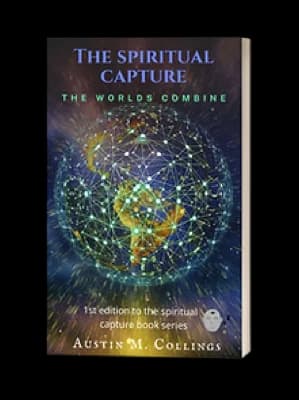
The Spiritual Capture, Austin M. Collings's foundational Physi-Tual novel, draws heavily on this territory. Insights to the Spiritual World provides the framework. Both books are listed below.
Continue reading
Articles on lucid dreaming

Metaphysical
Astral Projection vs Lucid Dreaming vs OBE
People use these three terms interchangeably, but they describe different things. Here is the honest distinction — one is a dream state, one is an experience, and one is a spiritual interpretation of that experience.
Read →
Lucid Dreaming
Best Lucid Dreaming Books (2026): Beginner to Advanced
Eight lucid dreaming books worth your time — what each one teaches, who it's for, and where to start, from first-time dreamers to the spiritual path.
Read →
Lucid Dreaming
Best Spiritual Lucid Dreaming Books (2026)
Most lucid dreaming books teach control. A smaller set treats the dream as a doorway — here are the spiritual and contemplative titles worth reading.
Read →
Research
Lucid Dreaming Research and Phenomenon
Lucid dreaming sits at the intersection of neuroscience and spiritual practice. A grounded look at the research, the Physi-Tual framework, and where to start.
Read →From the bookstore
Books on lucid dreaming


Frequently asked
Is lucid dreaming dangerous?
For most people, no. Lucid dreaming is a natural state and the techniques used to induce it (reality checks, dream journaling, MILD) are not associated with harm in research literature. The exception is people with certain dissociative or psychotic conditions, who should discuss the practice with a qualified mental health professional first.
How long does it take to learn?
Most beginners report their first lucid dream within four to eight weeks of consistent daily practice. Reliable, on-demand lucidity usually takes several months. Some people stumble into it the first night they try; others practise for a year before having a single full lucid dream. Both are normal.
Can lucid dreaming substitute for sleep?
No. Lucid dreaming happens during normal REM sleep, not in place of it. The body still needs the same sleep cycles. The wake-back-to-bed technique briefly interrupts sleep but does not reduce its quality if done correctly.
Is lucid dreaming the same as astral projection or out-of-body experience?
Different traditions use these terms differently. In contemporary research, lucid dreaming is the awareness of dreaming while asleep. Out-of-body experience is the perception of being outside the physical body, which can occur during sleep, near-death events, or other altered states. The two overlap but are not synonymous.
Related topics
Explore adjacent topics
Topic Hub
Consciousness
An entry point to the consciousness question — what it is, what research has shown, and the books worth reading.
Read the guide →Topic Hub
Meditation
A guide to meditation — how to start, what the research shows, and the books worth reading. From the Physi-Tual framework.
Read the guide →Topic Hub
Spiritual Awakening
A grounded guide to spiritual awakening — what it means, what to expect, and the books worth reading when the old framework no longer fits.
Read the guide →