Topic Hub
Consciousness: The Question, the Research, and the Reading
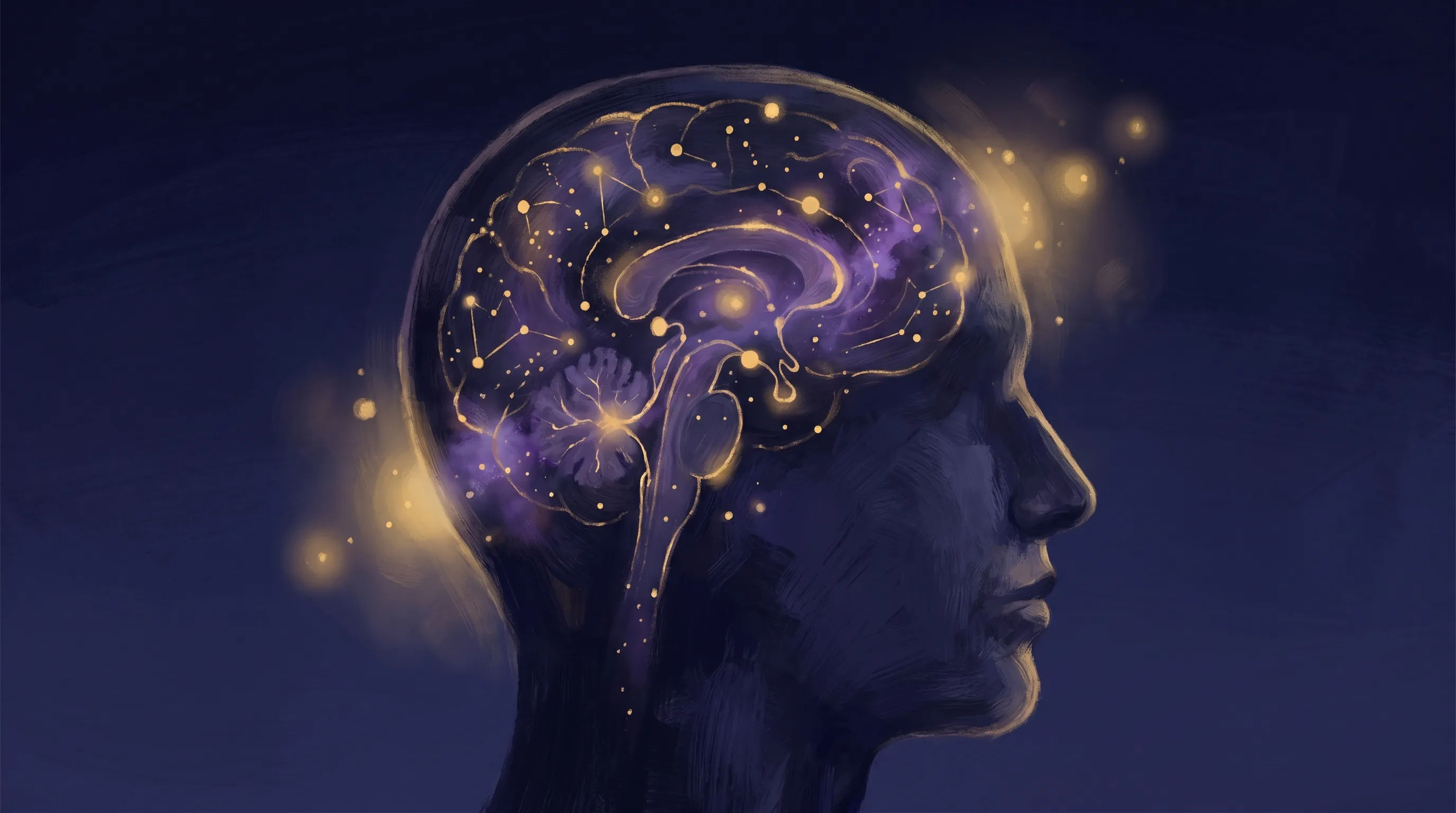
Consciousness is the territory where neuroscience, philosophy, and contemplative practice all converge — and where they all fall short. This page is the AMC Publishers entry: the question, the research, and the books that make the territory readable.
The question
What is consciousness? Why does any of this — the seeing, the hearing, the felt sense of being someone — exist at all? The question is harder than it looks. Philosopher David Chalmers named it the "hard problem": we can describe the brain's processing in detail without ever explaining why it is accompanied by subjective experience.
Easy problems of consciousness — how the brain integrates information, how it produces reports about itself, how attention works — are tractable. The hard problem is whether any account of these processes adds up to an explanation of why there is something it is like to be a conscious system at all. Forty years of progress on the easy problems has not closed the hard one.
What the research has produced
Consciousness research has produced solid results in three areas: the neural correlates of consciousness (which brain activity reliably accompanies which experiences), the structure of attention and awareness, and the mapping of altered states (sleep, anaesthesia, meditation, psychedelics, near-death experiences).
Several theoretical frameworks compete for explaining the data. Global Workspace Theory describes consciousness as the broadcast of information across brain networks. Integrated Information Theory measures consciousness by mathematical integration of information. Higher-Order Theories say consciousness arises when the brain represents its own states. Each framework explains some data and struggles with other data. None has reached consensus.
Outside materialist science, panpsychism — the position that consciousness is a fundamental property of reality, not an emergent product of brains — has returned to serious philosophical conversation. Once dismissed, it is now defended by philosophers who find the alternatives less plausible.
Where contemplative practice fits
Contemplative traditions have studied consciousness for thousands of years using a method modern science has only recently taken seriously: trained first-person observation of one's own experience. The reports from advanced contemplatives — Buddhist, Christian, Hindu, Sufi — converge on certain claims about the structure of attention, the layered nature of self-experience, and states accessible through sustained practice.
Contemplative neuroscience is the field where these reports meet brain imaging. Long-term meditators show distinctive patterns of activation, structural changes, and altered baselines. The exact relationship between subjective report and physiological measurement remains one of the most interesting open questions in the field.
The Physi-Tual position
The Physi-Tual position on consciousness is that the materialist and the contemplative accounts are describing the same phenomenon at different scales. The brain's neural activity and the contemplative's first-person report are not in conflict; they are two views of one event. The hard problem of consciousness, in this reading, is hard partly because we keep trying to reduce one view to the other rather than admitting both are real.
Insights to the Spiritual World develops this argument in detail. The book treats consciousness not as something to be explained from the outside, but as the medium in which all explanation occurs.


Frequently asked
What is the hard problem of consciousness?
Coined by philosopher David Chalmers in 1995, the hard problem is the question of why any physical processing is accompanied by subjective experience at all. We can explain the easy problems — how the brain integrates information, generates reports, allocates attention — without explaining why there is something it is like to undergo any of it.
Is consciousness produced by the brain?
Materialist science usually answers yes, treating consciousness as an emergent property of complex neural activity. Other positions, including panpsychism and traditional contemplative views, treat consciousness as more fundamental. The question is unresolved.
Can meditation tell us something about consciousness that science cannot?
Meditation provides trained access to first-person observation of one's own consciousness. This is data that ordinary science cannot collect directly. Contemplative-neuroscience research takes meditator reports seriously while testing them against brain measurements. Both methods have produced findings the other could not produce alone.
Related topics
Explore adjacent topics
Topic Hub
Meditation
A guide to meditation — how to start, what the research shows, and the books worth reading. From the Physi-Tual framework.
Read the guide →Topic Hub
Lucid Dreaming
A guide to lucid dreaming — what it is, how to practice it, the research, and the books worth reading. From the Physi-Tual catalogue.
Read the guide →Topic Hub
Metaphysical Books
What metaphysical books are, how the genre works, and which ones are worth reading — from beginners to long-time readers.
Read the guide →